Why Port Royal Luxury Real Estate Appeals Globally
July 16, 2026
July 16, 2026
If you are building a global luxury portfolio, not every property plays the same role. Some assets are meant to generate income, some provide geographic diversification, and a select few serve as long-term stores of prestige, scarcity, and lifestyle value. In Naples, Port Royal fits that last category especially well. If you are weighing where Port Royal belongs in a broader wealth strategy, this guide will help you understand its position, its market behavior, and why buyers often view it as a long-duration trophy holding. Let’s dive in.
Port Royal is often discussed like a neighborhood, but it functions more like a highly curated coastal brand. According to the Port Royal Property Owners’ Association, the community exists to preserve integrity, prestige, and property value. That framing matters because it shapes how buyers, owners, and the market perceive the area over time.
Its identity is also tied to a long-established structure. The association notes that the modern neighborhood began taking shape in 1959, and the Port Royal Club was founded alongside it. The club also states that membership is affiliated with ownership of eligible Port Royal property, which reinforces the connection between ownership and brand identity.
For a global buyer, that distinction is important. In many luxury markets, enduring value comes not only from the home itself but from the strength of the place name attached to it. Port Royal carries that kind of recognition within Naples.
At the highest end of the market, scarcity tends to matter more than volume. Port Royal’s value is closely tied to its waterfront orientation, limited supply, and the local rules that help preserve the physical character of the community. That combination can support long-term positioning in a way that is different from a typical luxury subdivision.
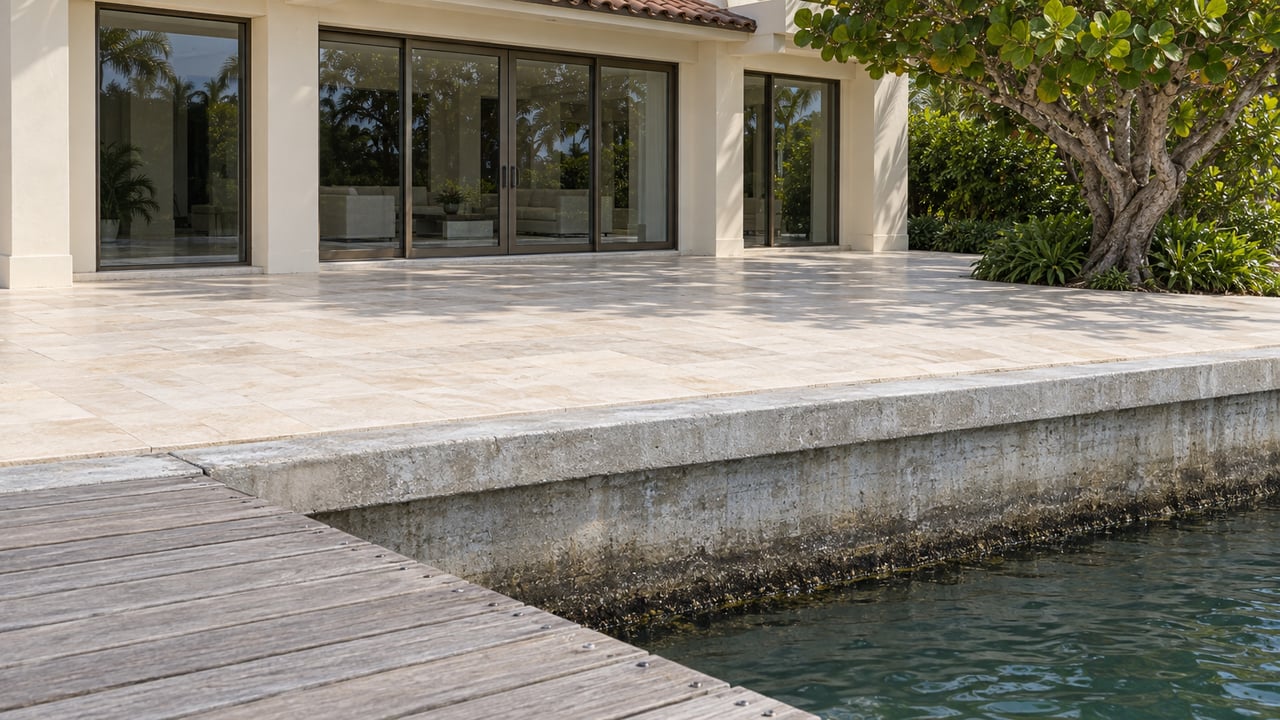
The Port Royal Property Owners’ Association publicly lists deed restrictions, builder approval, architect approval, dock procedures, and rip-rap procedures. The City of Naples also gives Port Royal its own pier restrictions within the R1-15A district. For buyers who think in portfolio terms, this governance structure can be part of the appeal because it helps protect consistency and waterfront functionality.
There is also a public framework for maintaining the area’s water access. The City of Naples finance department says the Port Royal Area Dredging District was created in 2011 to assess property for maintenance dredging, and the city’s special-assessments information says that project is complete and the assessments are being paid. The city also explains that special assessments can fund neighborhood improvements beyond routine services, are paid through the property-tax roll, and may take years to implement.
Some properties are purchased for yield. Others are acquired because they are difficult to replicate, difficult to replace, and likely to remain relevant to global wealth over time. Port Royal is better understood through that second lens.
Knight Frank’s Wealth Report says 44% of global family offices want to increase real estate allocations, and direct real estate already averages 22.5% of the typical family office portfolio. The same report notes that climate concerns are reshaping prime residential markets and that wealth mobility is concentrating demand in places such as Miami, Palm Beach, and Aspen. In that broader pattern, Port Royal can be framed as a long-duration prime coastal asset in a region with strong luxury-market attention.
That does not mean every Port Royal property performs the same way. It means the neighborhood itself sits in a category where scarcity, brand prestige, waterfront optionality, and long-term ownership logic often matter more than short-term return metrics. For many ultra-high-net-worth buyers, that is exactly the role they want one property to play.
Port Royal does not exist in isolation. Its global appeal is strengthened by Naples’ position as an active luxury market, which gives buyers more confidence that the broader region has depth, visibility, and ongoing demand.
Realtor.com’s November 2025 luxury report ranked Naples-Marco Island among the country’s fastest-moving luxury metros. It reported that the top 10% of listings sold in a median of 65 days and that million-dollar homes made up 35.8% of all listings. That backdrop helps explain why Port Royal is not just a beautiful enclave, but also part of a larger luxury ecosystem that attracts affluent domestic and international buyers.
Within that ecosystem, Port Royal sits at the very top. It is the kind of address that can anchor a Naples presence for a buyer who already owns property in other major wealth markets. In portfolio language, it can serve as a flagship residential holding rather than simply another second home.
Prestige and scarcity do not always translate into speed. In fact, one of the defining features of ultra-prime markets is that liquidity can be thin, selective, and highly property specific. Port Royal is a good example of that dynamic.
Redfin reports a median sale price of $16.3 million over the three months ending May 2026, with average days on market of 282 and only 8 homes sold in May. Realtor.com reports a median listing price of $29.95 million and 41 homes for sale in June 2026, with homes selling for 6.04% below asking on average and a 94% sale-to-list ratio.
Those figures suggest a market with very high pricing, limited transaction volume, and meaningful variation between one property and the next. In practice, that means buyers should be careful about broad assumptions. Address, water orientation, lot quality, condition, and design execution can all have an outsized effect on value and timing.
A thinly traded market can feel less predictable, but that does not automatically make it weaker. In global luxury real estate, low turnover often signals that owners are not quick sellers and that available opportunities are inherently limited. For certain buyers, that can strengthen the appeal.
In Port Royal, scarcity is part of the product. When inventory remains relatively low and ownership is tightly held, each acquisition tends to carry more importance. This is especially true for waterfront properties, where the specific location and access profile may not be easy to duplicate elsewhere.
That said, scarcity should never be confused with uniform pricing power. Some homes command a premium because they combine location, condition, architectural quality, and water access in a compelling way. Others may linger because the market sees friction in one or more of those areas.
If you are comparing Port Royal with other elite markets, it helps to focus on the factors that most often shape long-term performance and ownership satisfaction. Price alone rarely tells the full story in a neighborhood like this.
Here are a few areas worth weighing carefully:
This is where local, precise guidance becomes especially valuable. In a market with limited comparable sales and meaningful variation at the property level, nuance matters.
When you look at Port Royal through a global portfolio lens, the strongest case is not based on near-term yield. It is based on brand strength, controlled scarcity, waterfront positioning, and the staying power of a globally legible Naples address.
For some buyers, that makes Port Royal a useful counterweight to more urban holdings or more transactional markets. It offers a different kind of value proposition, one centered on lifestyle utility, prestige, and the potential resilience that can come from tightly held supply.
It also aligns with how many affluent buyers increasingly think about residential property. A home can be personal, practical, and strategic at the same time. In Port Royal, those layers often overlap.
Because Port Royal is segmented and thinly traded, successful decision-making often comes down to judgment more than speed. You need to understand not only list prices and closed sales, but also why one property draws strong interest while another sits. In ultra-prime neighborhoods, small differences can carry very large pricing consequences.
That is why buyers and sellers often benefit from an advisor who sees the market through several lenses at once. Neighborhood structure, waterfront nuance, design quality, and long-term positioning all matter here. A thoughtful process can help you separate enduring value from surface-level appeal.
For clients considering Port Royal as part of a broader luxury real estate strategy, founder-led guidance can make the process calmer and more precise. If you are evaluating a purchase, a sale, or the long-term role of Naples property in your holdings, the team at Krapf Group offers discreet, design-aware guidance shaped by local knowledge and an international perspective.
Stay up to date on the latest real estate trends.


As real estate advisors with a background in investing and development, we provide a unique perspective, guiding our clients beyond transactions and focusing on long-term value, quality, and lifestyle.
Licensed Florida Real Estate Company
Teresa Krapf-Dobr
T: (239) 367-2896
[email protected]
Lukas Krapf-Dobr
L: (239) 888-9254
[email protected]
Address
1164 Goodlette Rd N
Naples FL 34102