Royal Harbor Boating Community Guide for Naples Buyers
June 25, 2026
June 25, 2026
If you are searching for a Naples waterfront home, Royal Harbor can look simple at first glance. It is not. For boaters and waterfront buyers, the real value often comes down to details like canal-front versus bay-front location, dock layout, flood zone, and how easily your boat and outdoor living plans fit the property. Understanding those moving parts can help you buy with more clarity and fewer surprises. Let’s dive in.
Royal Harbor sits on the east side of Naples Bay, and its boating identity is closely tied to East Naples Bay canals and waterfront infrastructure. City records describe the neighborhood canal system as manmade canals and tributaries of East Naples Bay, created as part of the area’s waterfront development.
That matters because your experience here is shaped by more than just having water behind the house. In Royal Harbor, the character of the lot, the canal dimensions, and the route out to Naples Bay all play a role in how the property functions for day-to-day boating.
One of the first questions to ask is whether a parcel is canal-front or bay-front. The East Naples Bay Special Taxing District covers the canals within Royal Harbor and nearby subdivisions, but it does not include properties facing Naples Bay.
That district boundary helps support an important distinction in the neighborhood. Some homes are positioned on canals that feed into Naples Bay, while others face the bay itself. For a buyer, that can affect views, dock design, navigability, and the overall boating setup.
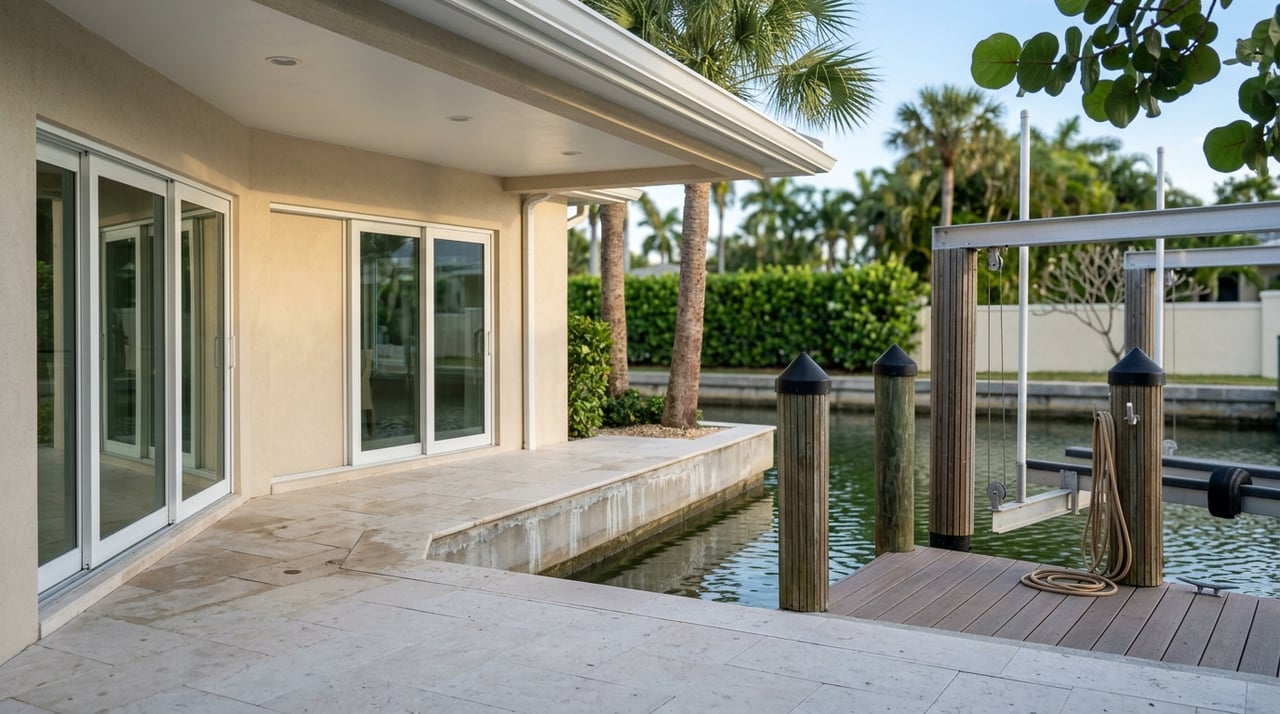
A canal-front property may offer a protected dock setting and a classic palm-lined waterfront feel. A bay-front parcel may offer a different relationship to open water, but it can also bring a different permitting and design conversation.
The right fit depends on how you plan to use the property. If your priorities include a certain vessel size, lift configuration, or outdoor layout, the lot type is one of the first pieces to evaluate.
NOAA identifies Gordon Pass as the entrance to Naples Bay, with a dredged channel leading from the Gulf through the pass to Naples. NOAA also places Royal Harbor on the east side of Naples Bay and notes that canals were dredged and marshland backfilled to create waterfront homesites.
For many buyers, this supports the appeal of Royal Harbor as a boating neighborhood with practical access to Naples Bay. Still, route access is only part of the story. Operating conditions matter too.
NOAA notes a no-wake speed limit in Gordon Pass and in parts of Naples Bay between specific markers and the Naples bridge. In practical terms, your time on the water is shaped not just by distance to open water, but also by local speed and navigation conditions.
That is why experienced waterfront buyers often look beyond map location alone. The best property for you is the one that matches both your boat and your expected boating rhythm.
Royal Harbor owners also benefit from nearby marina services. Naples City Dock in Crayton Cove sits on Naples Bay and is just minutes from downtown.
According to the city, the marina offers fuel, pump-out, ice, bait, transient dockage, and annual dockage accommodations for vessels up to 60 feet. For homeowners and visiting guests, that can be a helpful support amenity close to the neighborhood.
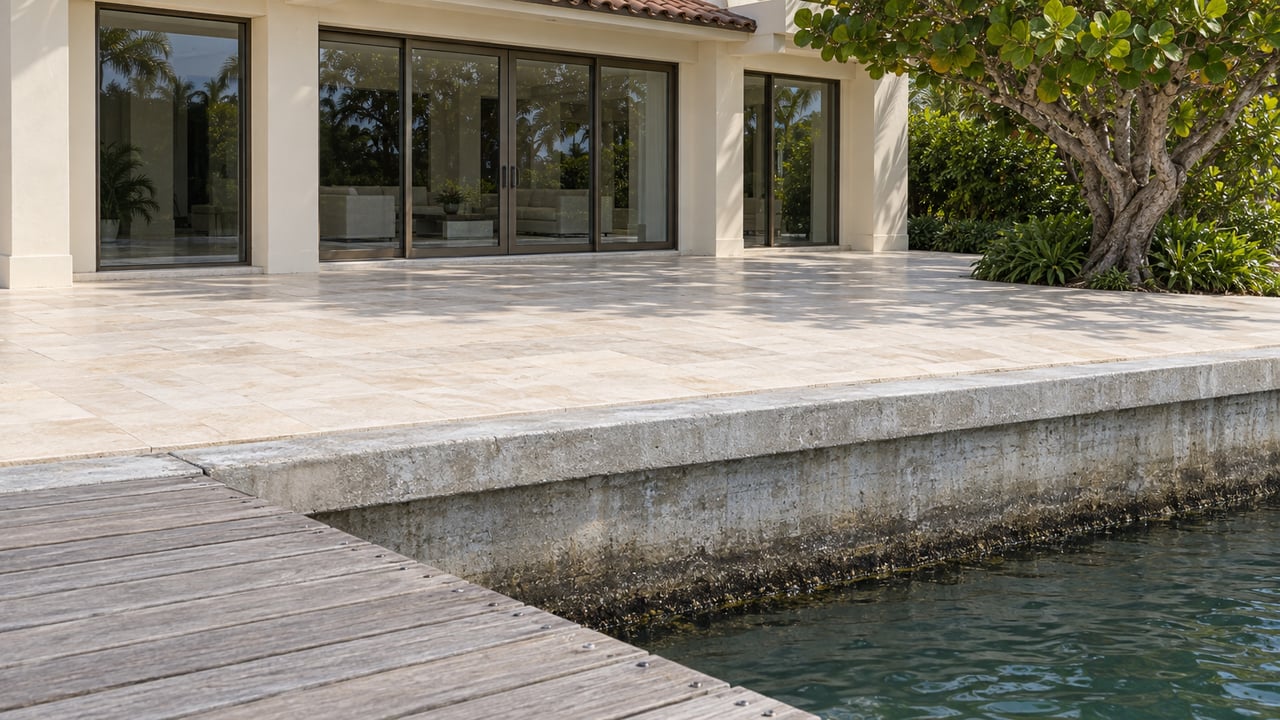
In Naples, marine improvements are not casual add-ons. The city requires a marine permit for the construction or repair of docks, boat lifts, pilings, seawalls, riprap, and dredging.
That means the dock conversation should begin early, whether you are buying an existing home or planning a renovation. A beautiful waterfront lot may still need careful review if your intended vessel or lift plan is specific.
City dock applications must include:
The code also states that no pier may interfere with safe navigation. Walkways may not exceed 5 feet in width, and the combined width of the pier, pilings, lift, and vessel cannot exceed 25 percent of the waterway width at that point.
This is one of the most important details in Royal Harbor. Naples applies setback rules not only to the pier and lift, but also to the vessel on the lift.
In other words, the size of your boat can directly affect whether a particular dock setup works on a given parcel. That is why a lot that looks ideal from the street or even from the seawall may need deeper review before it truly matches your plans.
City subdivision standards provide useful context for waterfront buyers. They state that canal bottoms must be at least 5 feet below mean low water and that canal depth at the seawall or base of riprap must be at least 1 foot below mean low water.
Those standards help explain the intended design of the canal system, but they are not a substitute for parcel-level verification. Actual water depth at a specific property should still be confirmed through survey and inspection.
Two homes in the same neighborhood can function very differently for boating. The location along the canal, the dock placement, and the existing improvements can all change what is practical.
For that reason, serious buyers usually want to confirm how the property works in real conditions, not just in listing language. Precision matters on the water.
In Royal Harbor, floodplain review is part of the buying process. The City of Naples says almost all permitted development requires floodplain review, and its 2024 Flood Insurance Rate Maps are in effect for construction and insurance purposes.
The city also provides address-based flood map tools, which is important because neighborhood name alone is not enough. You want the exact flood zone for the specific property you are evaluating.
The city distinguishes between AE and VE flood zones. It also states that residential floodproofing below the base flood elevation is not permitted in a VE area.
If a structure is substantially damaged or substantially improved, it must be brought into compliance where required, including elevation to or above the base flood elevation. For buyers considering renovations, additions, or long-term value, this is a major part of the planning conversation.
The City of Naples also notes that flooding is not covered by standard homeowners insurance and that city residents can apply for NFIP flood insurance. For waterfront buyers, this means insurance cost and flood compliance should be considered early, not after contract.
In luxury waterfront real estate, the right purchase is not only about beauty and location. It is also about how the property performs on paper and in practice.
In Royal Harbor, your home plan and dock plan need to work together. Because Naples regulates dock geometry, setbacks, marine permitting, and flood-related development standards, the rear yard often has to carry several goals at once.
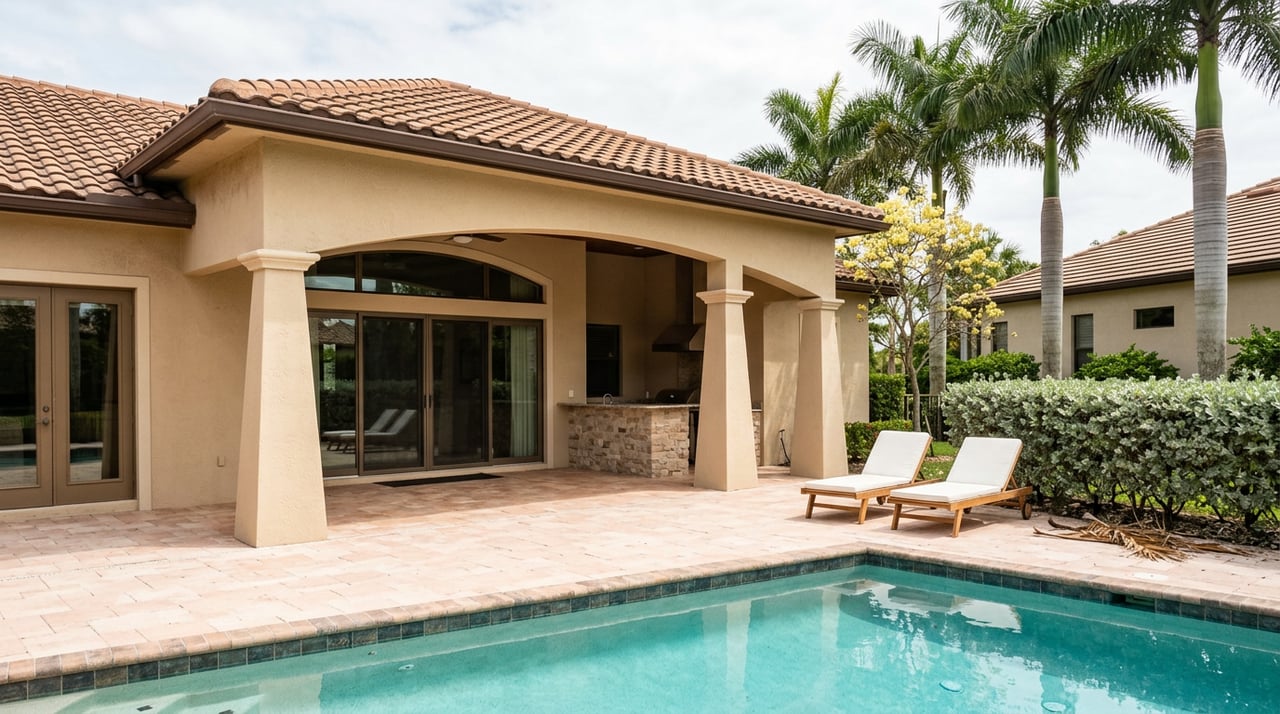
You may want a pool, lanai, outdoor kitchen, dock, lift, and comfortable circulation around all of it. On some parcels, that comes together easily. On others, the layout can feel more constrained once setbacks, vessel dimensions, and waterfront rules are taken into account.
It helps to evaluate the lot as a single waterfront design envelope. Instead of asking whether the home is attractive or whether the dock exists, ask whether the entire property supports the lifestyle you want.
That includes boating, entertaining, privacy, and any future renovation plans. In a neighborhood like Royal Harbor, details often define long-term satisfaction.
If you are considering Royal Harbor for boating and waterfront living, focus on a few practical questions first:
These are not minor details. They are often the difference between a property that simply looks appealing and one that truly supports your waterfront goals.
Royal Harbor remains compelling because it offers a true Naples waterfront lifestyle tied to canals, bay access, and close proximity to downtown. For the right buyer, it can be an exceptional fit.
The key is to look closely and evaluate each property on its own merits. In a boating neighborhood, precision matters. If you want clear guidance on Royal Harbor waterfront homes, the Krapf Group offers discreet, detail-oriented advice shaped by Naples market knowledge and a thoughtful luxury perspective.
Stay up to date on the latest real estate trends.


As real estate advisors with a background in investing and development, we provide a unique perspective, guiding our clients beyond transactions and focusing on long-term value, quality, and lifestyle.
Licensed Florida Real Estate Company
Teresa Krapf-Dobr
T: (239) 367-2896
[email protected]
Lukas Krapf-Dobr
L: (239) 888-9254
[email protected]
Address
1164 Goodlette Rd N
Naples FL 34102